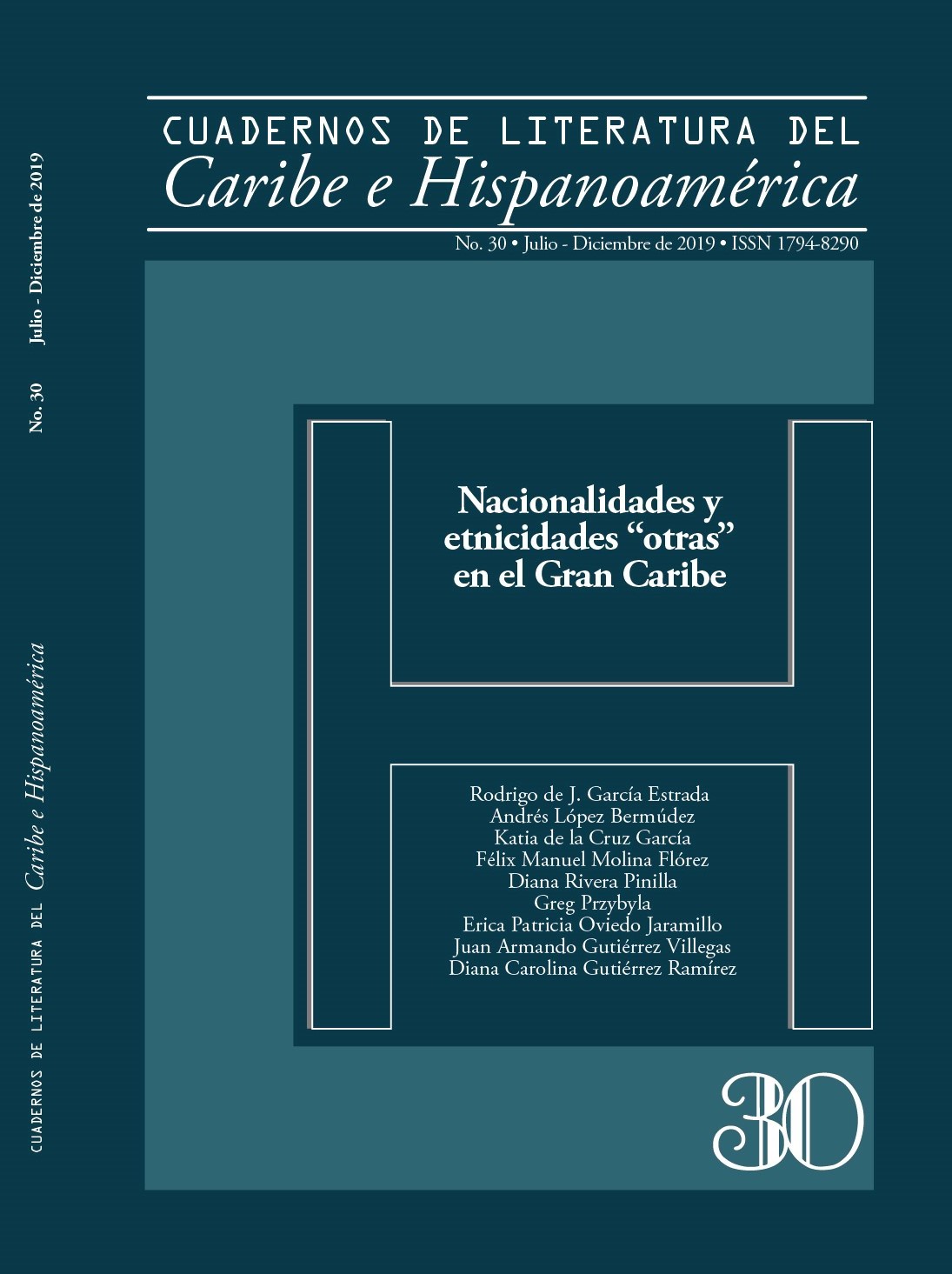
Arquetipo afrocaribeño de Èṣù-Elegbará en Chango, el gran putas de Manuel Zapata Olivella: Èṣù-Elegbará, El otro gran putas
DOI:
https://doi.org/10.15648/cl.30.2019.3Keywords:
Zapata Olivella, Eshú, Afro-Caribbean Philosophical archetype, Ifá oracleAbstract
This article analyzes the presence of the Afro-Caribbean philosophical archetype of Èṣù-Elegbará in the novel Changó, the biggest badass. Perform an aesthetic and philosophical characterization of the orisha as the crossroads, metaphor of time, the owner of the àsę and as the door of morality. It assumes Kongo and Yoruba philosophy, the Ifa Oracle and the mythology of religions of Afro-Caribbean origin as Signifying Systems for the analysis of the second chapter “El muntu americano”. Finally, it established that moral philosophy implicit in the divinatory system of the Yoruba people and the moral archetypes that this contains can be traced through literary structures and used as a reference for transnational identity in the Caribbean.
References
Abimbola, W. (1997). Ifa: An exposition of Ifa literary corpus. Athelia Henrietta Press.
Abiodun, R. (1994). Understanding Yoruba Art and Aesthetics: The Concept of Ase. African Arts. 27 (3), 68-103. DOI: https://doi.org/10.2307/3337203
Awolalu, J. (Spring de 1976). What Is African Traditional Religion? Studies in Comparative Religion. 10 (2), 10(2), 1-10.
Bascom, W. (1969). Ifa Divination: Comunication between Gods and Men in West Africa. Bloomington: Indiana University Press.
Battestini, S. (2004). African Writing Systems, Texts and Cultural Identities. Obtenido de INST: http://www.inst.at/trans/15Nr/01_2/battestini15.htm
Brathwaite, E. (1974). The African Presence in Caribbean Literature. Daedalus. 103 (2), 73-109.
Falola, T. (2013). Èsù: The God without Boundaries. En T. Falola, Èsù. Yoruba God, Power and the Imaginative Frontiers (págs. 3-36). Durham: Carolina Academic Press.
Gates, H. (1989). The Signifying Monkey: A Theory of African-American Literary Criticism. New York - Oxford: Oxford University Press. DOI: https://doi.org/10.1215/10439455-3.1.75.2
Henao, D. (2010). Los hijos de Changó, la epopeya de la negritud en América. En M. Zapata, Changó, el gran putas (págs. 11-29). Bogotá: Ministerio de Cultura. Bibioteca de Literatura Afrocolombiana.
Martínez-Ruíz, B. (2017). Green Machine/Chronicles of an everyday lighness. Milán: 5 Continents Editions.
Navarrete, M. (2015). De reyes, reinas y capitanes: los dirigentes de los palenques de las sierras de María, siglos XVI y XVII. Fronteras de la Historia. 20 (2), 44-62. DOI: https://doi.org/10.22380/202746889
Thompson Farris, R. (2010). Flash of the spirit: African & Afro-American art & philosophy. New York: Vintage.
Washington, T. (2013). The Penis, the Pen, and the Praise: Esu the Seminal Force in African American Life, Literature and Lyrics. En T. Falola, Esu: Yoruba God, Power and the Imagine Frontiers (págs. 315-347). Durham, North Carolina: Caroline Academic Press.
Witte, H. (1984). Ifa and Esu: Iconography of order and disorder. Holland: Kunsthandel Luttik.
Zapata, M. (2010). Changó, el gran putas. Bogotá, D.C.: Ministerio de Cultura. Biblioteca de Literatura Afrocolombiana.
Zapata, M., & Krakusin, M. (2001). Conversación informal con Manuel Zapata Olivella. Afro-Hispanic Review. 20 (1), 15-28.
Zapata, M. (1998). La negredumbre en García Márquez. En W. Mina, Deslumbramientos de América (págs. 167- 177). Cali - Cartagena: Universidad del Valle - Universidad de Cartagena.
Friedemann, N. (1993). Los Africanos: Cifras y Origen en La saga del negro: presencia africana en Colombia. En N. Friedemann, Presencia african en Colombia. La Saga del negro (págs. 39-54). Bogotá, D.C.: Instituto de Genética Humana - Pontificia Universidad Javeriana.
How to Cite
Downloads
Downloads
Published
Issue
Section
License
- Los autores/as conservarán sus derechos de autor y garantizarán a la revista el derecho de primera publicación de su obra, el cuál estará simultáneamente sujeto a la Licencia de reconocimiento de Creative Commons que permite a terceros compartir la obra siempre que se indique su autor y su primera publicación esta revista.
- Los autores/as podrán adoptar otros acuerdos de licencia no exclusiva de distribución de la versión de la obra publicada (p. ej.: depositarla en un archivo telemático institucional o publicarla en un volumen monográfico) siempre que se indique la publicación inicial en esta revista.
- Se permite y recomienda a los autores/as difundir su obra a través de Internet (p. ej.: en archivos telemáticos institucionales o en su página web) antes y durante el proceso de envío, lo cual puede producir intercambios interesantes y aumentar las citas de la obra publicada. (Véase El efecto del acceso abierto).